The single most common misconception about the EU AI Act is that it has "a deadline." It has at least six, spread from 2024 to 2028, and in 2026 one of the biggest of them moved. If your compliance planning is pinned to a single date, it's almost certainly pinned to the wrong one.
Here's the complete EU AI Act timeline in one place: what took effect when, what's binding on firms today, and what the Digital Omnibus deferred. Dated, sourced, and kept current.
The timeline at a glance
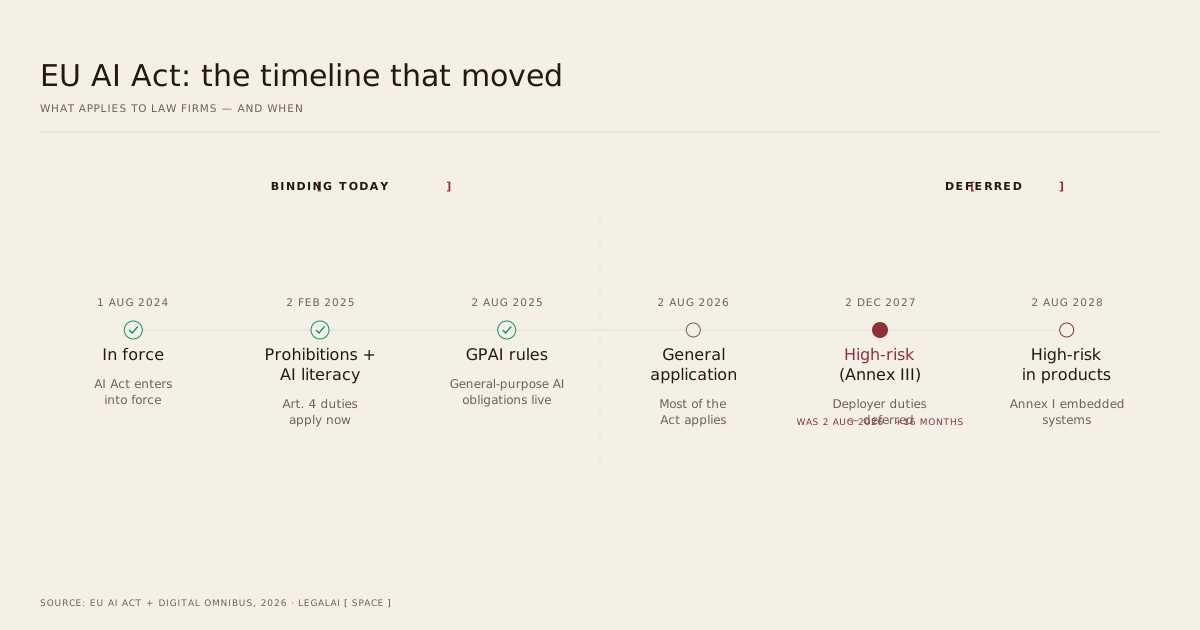
Each milestone below is a distinct set of obligations switching on, not one cliff edge.
Every deadline, dated
- 1 August 2024: entry into force. The Act became law. The clock on every later obligation starts here.
- 2 February 2025: prohibitions + AI literacy. The banned "unacceptable-risk" practices took effect, and the Article 4 AI-literacy duty: that anyone using an AI system has sufficient understanding to use it responsibly. This is binding now and was untouched by later deferrals.
- 2 August 2025: general-purpose AI (GPAI) rules. Obligations on the foundation models most tools are built on. Also live now.
- 2 August 2026: general application. The date most of the Act applies from, and the one that dominated commentary. But see the next entry: the high-risk obligations that most affect professional-services deployers were moved off it.
- 2 December 2027: high-risk (Annex III) obligations. Originally 2 August 2026, deferred by the Digital Omnibus (the European Parliament approved the postponement in June 2026): a 16-month slip. Article 50 limited-risk transparency duties moved to December 2026.
- 2 August 2028: high-risk AI embedded in regulated products (Annex I). The last major phase-in.
What's actually binding today vs deferred
This is the distinction that matters for planning right now:
| Status | Obligations |
|---|---|
| Binding now | Prohibitions (Feb 2025); AI-literacy Article 4 (Feb 2025); GPAI rules (Aug 2025) |
| From Aug 2026 | General application of most of the Act |
| Deferred to Dec 2027 | Stand-alone high-risk (Annex III) deployer obligations |
| Deferred to Dec 2026 | Article 50 synthetic-content transparency |
| From Aug 2028 | High-risk AI embedded in products (Annex I) |
Practical note: "The high-risk deadline moved to 2027" is being used, wrongly, as a reason to do nothing. But the AI-literacy duty and the prohibitions have applied since February 2025. The deferral bought time on the heaviest obligations; it didn't switch anything off.
Why the dates moved
The Digital Omnibus on AI: a European Commission simplification package proposed in November 2025 and approved by the European Parliament in June 2026: deferred the high-risk timelines to give organisations and the supporting standards more time to mature. For a UK or EU firm, the useful reading isn't "relax until 2027"; it's "you now have a defined runway to build governance properly, instead of scrambling against August 2026."
We cover what the Act actually requires of firms in the EU AI Act summary and the UK-specific angle in the EU AI Act and UK law firms.
What to do with the runway
- If you're a UK or EU firm deploying AI: treat the February-2025 duties (AI literacy, no prohibited practices) as already binding, and use the runway to December 2027 to build deployer controls, human oversight, logging, monitoring, rather than leaving them to the last quarter.
- If you're a compliance officer: the Act's phased structure maps onto an AI governance framework you'd want regardless. Build once; satisfy the Act and your domestic obligations together.
- If you brief partners or clients on this: lead with "what's binding today," not "the 2026 deadline," because the binding-today list is what actually creates present obligations.
FAQ
When does the EU AI Act take effect? It entered into force on 1 August 2024 and phases in: prohibitions and AI-literacy duties from 2 February 2025, GPAI rules from 2 August 2025, general application from 2 August 2026, high-risk (Annex III) obligations from 2 December 2027, and product-embedded high-risk from 2 August 2028.
Did the EU AI Act deadline change? Yes. The Digital Omnibus, approved by the European Parliament in June 2026, deferred the stand-alone high-risk (Annex III) obligations from 2 August 2026 to 2 December 2027, and moved Article 50 transparency to December 2026.
What is binding under the EU AI Act right now? The prohibited-practice ban, the Article 4 AI-literacy duty (both since February 2025), and the general-purpose AI rules (since August 2025). These were not affected by the deferral.
What happens on 2 August 2026? Most of the Act reaches general application. However, the high-risk deployer obligations that most affect professional-services firms were moved off this date to December 2027.
Does the timeline apply to UK firms? It can, through the Act's extraterritorial reach: where a firm serves EU clients or its AI output is used in the EU. The dates are the same; see our EU-AI-Act-and-UK-firms guide.
LegalAI Space builds AI for legal teams with governance and audit trails aligned to the EU AI Act's live obligations and UK SRA duties alike. Book a 30-minute call with Daman.
Related reading
- The EU AI Act, summarised: the risk tiers and who's affected.
- The EU AI Act and UK law firms: why the runway is a reason to start now.
- AI governance framework for law firms: the framework the timeline rewards building.
- EU AI Act compliance for law firms: how LegalAI Space maps to the Act's obligations, article by article.